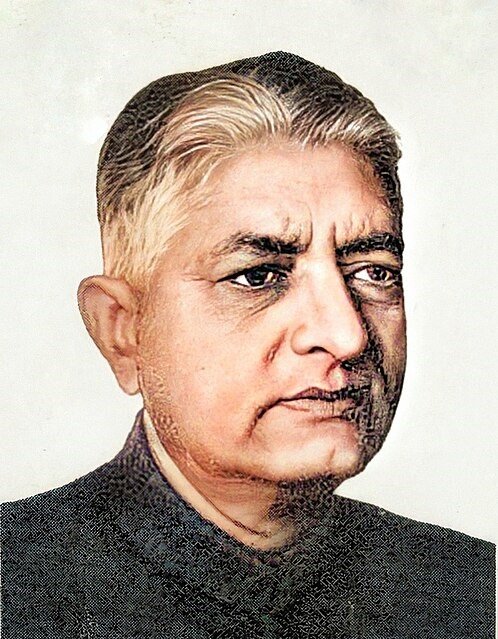
Before 1948, there was no Himachal Pradesh — only a patchwork of roughly thirty small princely and feudal hill states, each with its own ruler, administration and, in many cases, its own local customs and even legal systems, stretching from the Shivalik foothills to the high Himalaya bordering Tibet. Turning that patchwork into a coherent modern state was the work, more than any other single individual, of Yashwant Singh Parmar, a lawyer born in Sirmaur district who would go on to serve as Himachal Pradesh’s first chief minister for over two decades.
Parmar trained as a lawyer and academic before independence, eventually completing a doctorate on the tribal and customary legal systems of the western Himalaya — research that gave him an unusually detailed, firsthand understanding of the very hill states he would later help merge into a single administrative unit. That combination of legal training and direct regional knowledge proved decisive when, following independence and the integration of India’s princely states, the task of consolidating Himachal Pradesh’s dozens of small hill territories fell to him.
The process was neither quick nor simple. Himachal Pradesh was first formed in 1948 as a much smaller Chief Commissioner’s Province, bringing together a first tranche of the old hill states; further mergers, including the politically significant absorption of the former Punjab hill districts — among them Kangra, Kullu, Lahaul and Spiti, and Kinnaur — did not happen until 1966, and full statehood, with Shimla as its capital, was not achieved until 1971. Parmar led the territory through nearly all of this period, first as Chief Minister of the Union Territory and then of the full state, navigating not just administrative integration but the harder work of building a shared political identity across communities that had, until recently, answered to entirely separate rulers.
Parmar is remembered particularly for pushing horticulture, and apple cultivation specifically, as a deliberate economic strategy for the state’s mid-altitude districts, alongside significant investment in roads and rural infrastructure across terrain that had, in many of the old princely states, seen very little of either. His approach favoured steady, incremental development over rapid, disruptive change — a style suited, many later assessments suggest, to a state built from so many previously separate and often mutually unfamiliar pieces.
He served as chief minister until 1977 and remained a significant figure in the state’s politics until his death in 1981. Today, Himachal Pradesh University in Shimla bears his name, a fitting tribute to a figure whose career began with academic research into the region’s fragmented hill-state past and ended with the considerably harder task of assembling that fragmented past into a single functioning state.
